.png)
Sludge Press
Sludge Press
Summary
The Sludge Press Project adds an important new dewatering step to our wastewater treatment process. This press removes additional water from the biosolids produced during treatment, creating a drier, more manageable material and significantly reducing the volume that must be handled, transported, or disposed of.
This added step also helps address growing challenges with land application, which has become increasingly difficult in our current operational setup. Rising hauling costs, limited availability of approved agricultural land, seasonal restrictions, and stricter regulatory requirements have all made it harder to rely on land application as our primary method of sludge management. These constraints not only increase expenses, but also create logistical hurdles and uncertainties in scheduling and long‑term planning.
By integrating the sludge press into our existing system we’re improving efficiency, reducing dependence on land‑application options, and strengthening the overall reliability of our sludge‑handling process. This project supports environmental compliance, cost control, and long‑term sustainability for the authority and the community we serve.
The Sludge Press Project adds an important new dewatering step to our wastewater treatment process. This press removes additional water from the biosolids produced during treatment, creating a drier, more manageable material and significantly reducing the volume that must be handled, transported, or disposed of.
This added step also helps address growing challenges with land application, which has become increasingly difficult in our current operational setup. Rising hauling costs, limited availability of approved agricultural land, seasonal restrictions, and stricter regulatory requirements have all made it harder to rely on land application as our primary method of sludge management. These constraints not only increase expenses, but also create logistical hurdles and uncertainties in scheduling and long‑term planning.
By integrating the sludge press into our existing system we’re improving efficiency, reducing dependence on land‑application options, and strengthening the overall reliability of our sludge‑handling process. This project supports environmental compliance, cost control, and long‑term sustainability for the authority and the community we serve.
Updates
The Sludge Press Project has reached several key milestones as we move toward full implementation. Preliminary engineering is now complete, giving us a solid technical foundation and confirming that the proposed dewatering system integrates effectively with our existing treatment process.
To further validate performance, a pilot study was scheduled for April 8th, during which the press was tested under real operating conditions. The results will help refine design parameters, confirm expected efficiencies, and provide the data needed to finalize system sizing and layout.
In parallel with the technical work, we are actively pursuing funding to support project construction. Congressional Directed Spending (CDS) applications have been submitted to both of Pennsylvania’s U.S. Senators, and we have also submitted an application to the Pennsylvania Department of Community and Economic Development (DCED) for a Local Share Account (LSA) grant. These requests aim to secure a combination of federal and state funding to reduce the financial burden on our ratepayers and help move the project into the next phase.
With engineering completed, the pilot test completed, and funding applications underway, the project is well‑positioned to advance into detailed design and, ultimately, construction.
Pictures
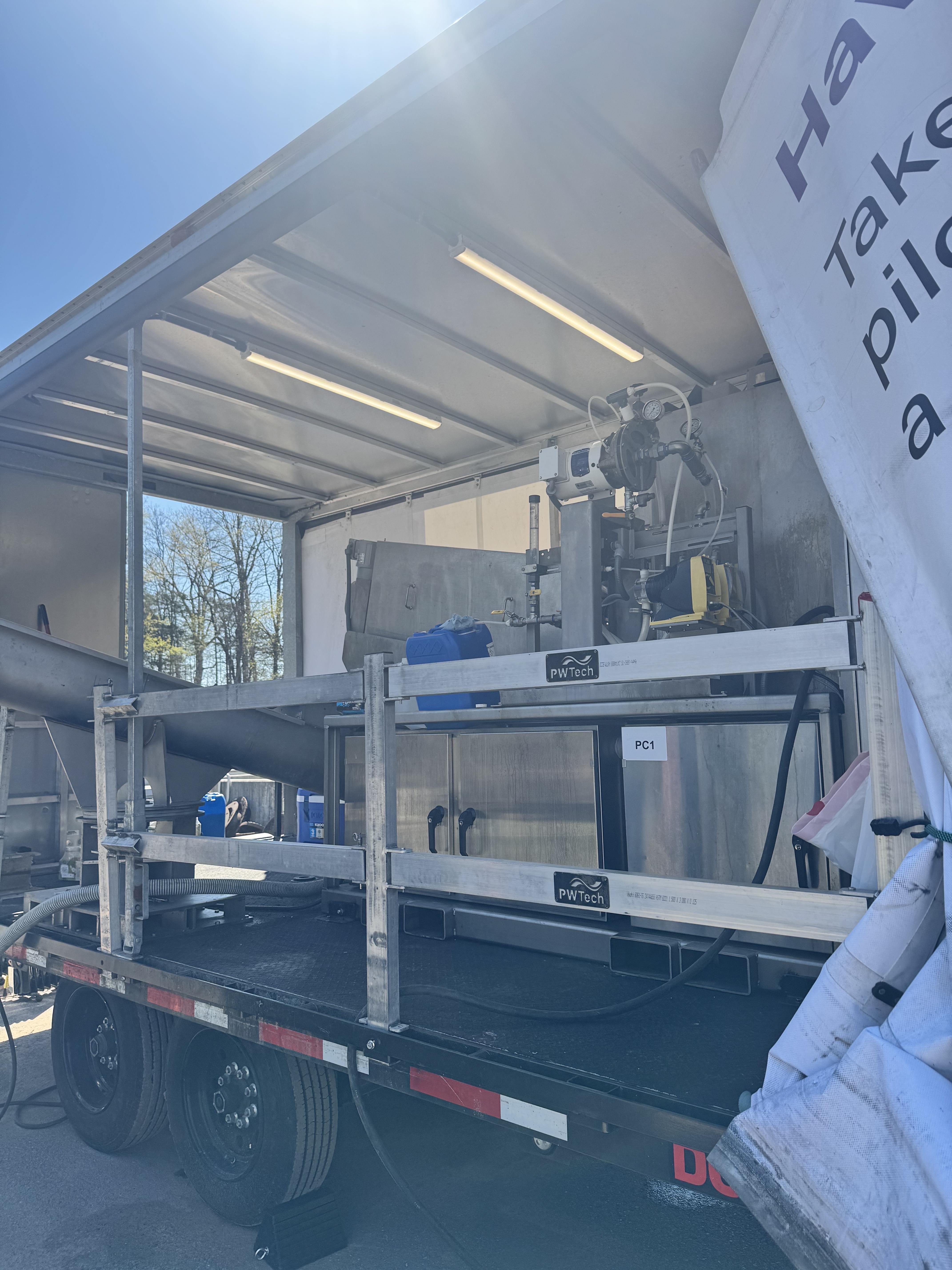
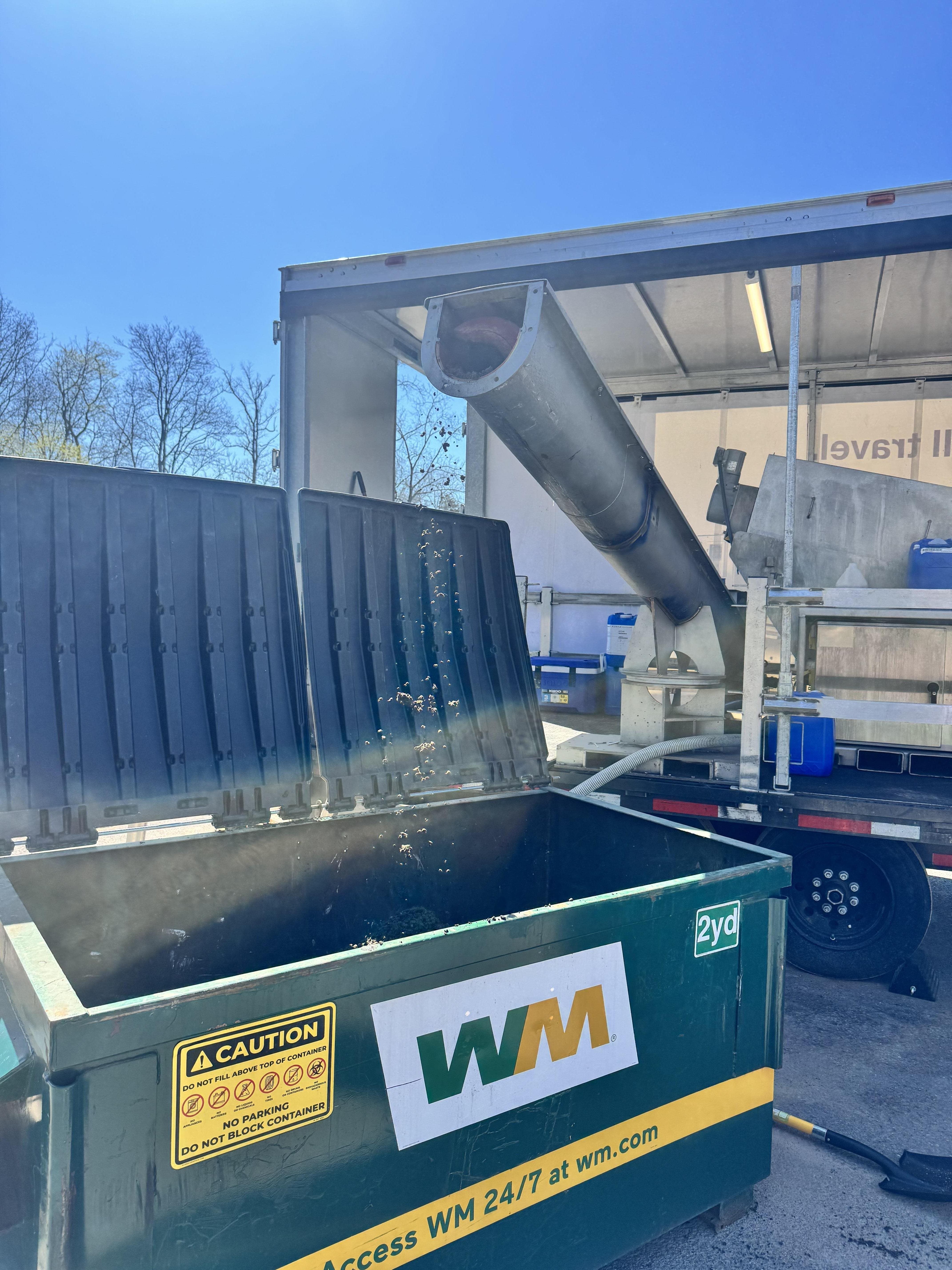
Sludge press on the truck for our pilot study.
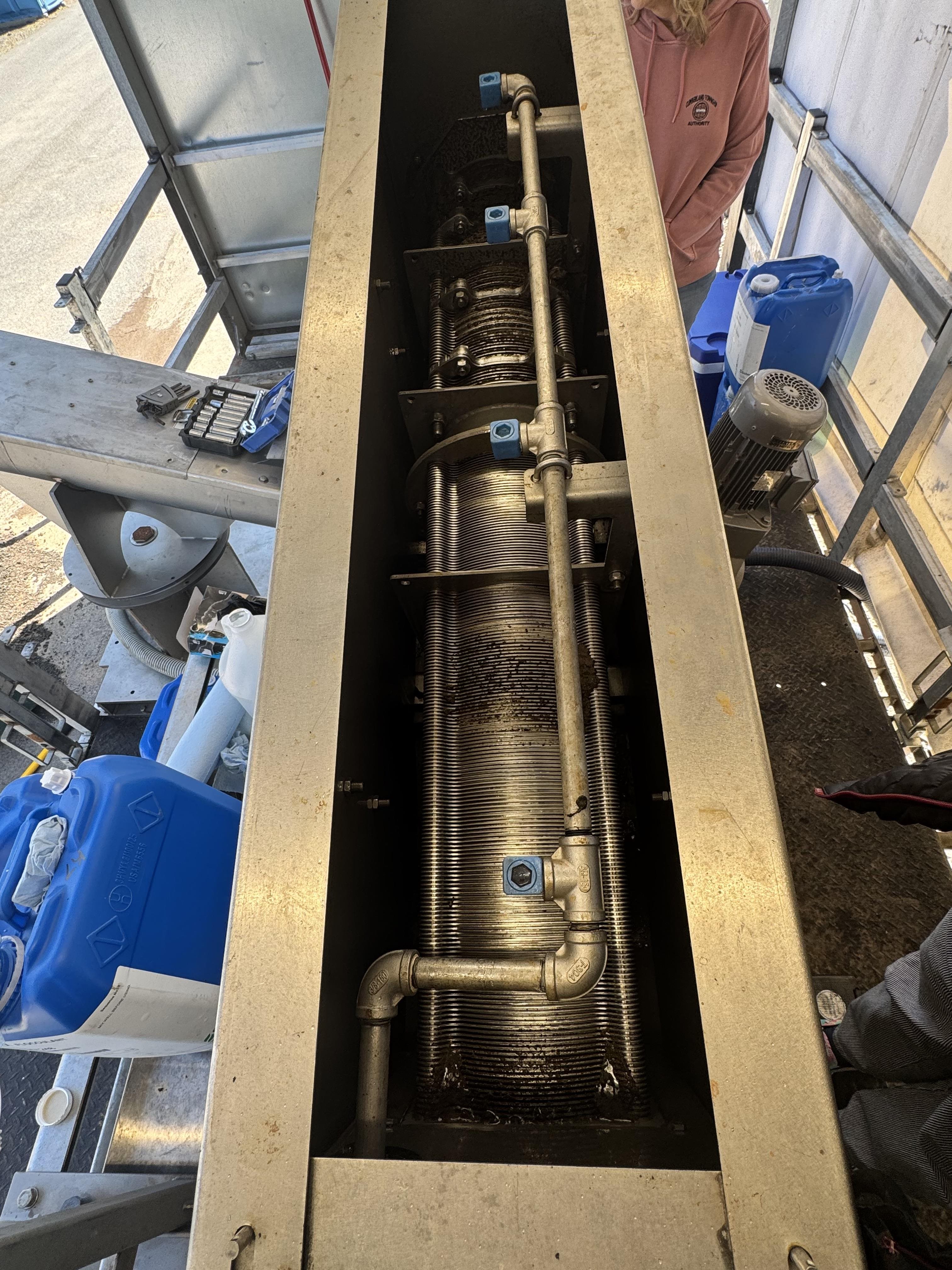
The press part of the press.
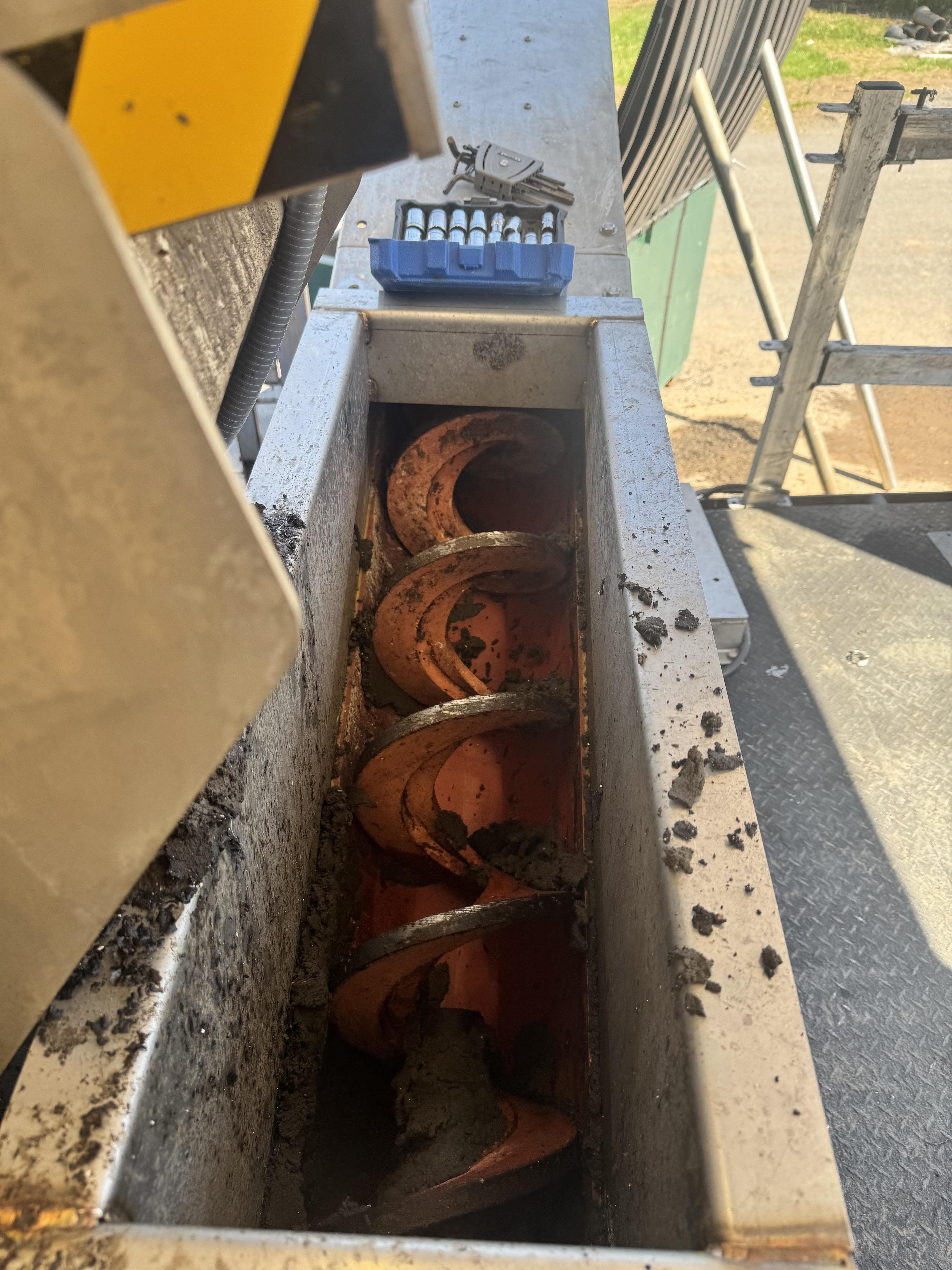
The auger sending the finished product out the chute and into the dumpster.
The chute into the dumpster! The final product has the consistency of soil.